A line of scripture in the air
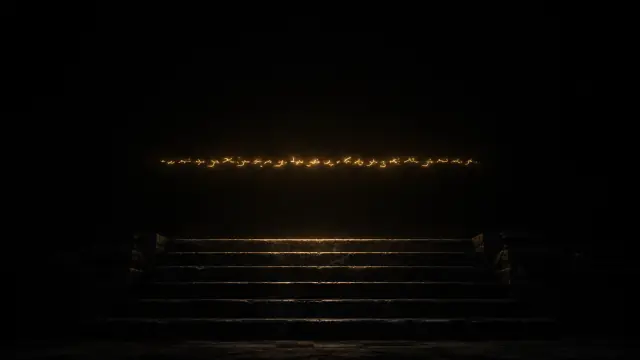
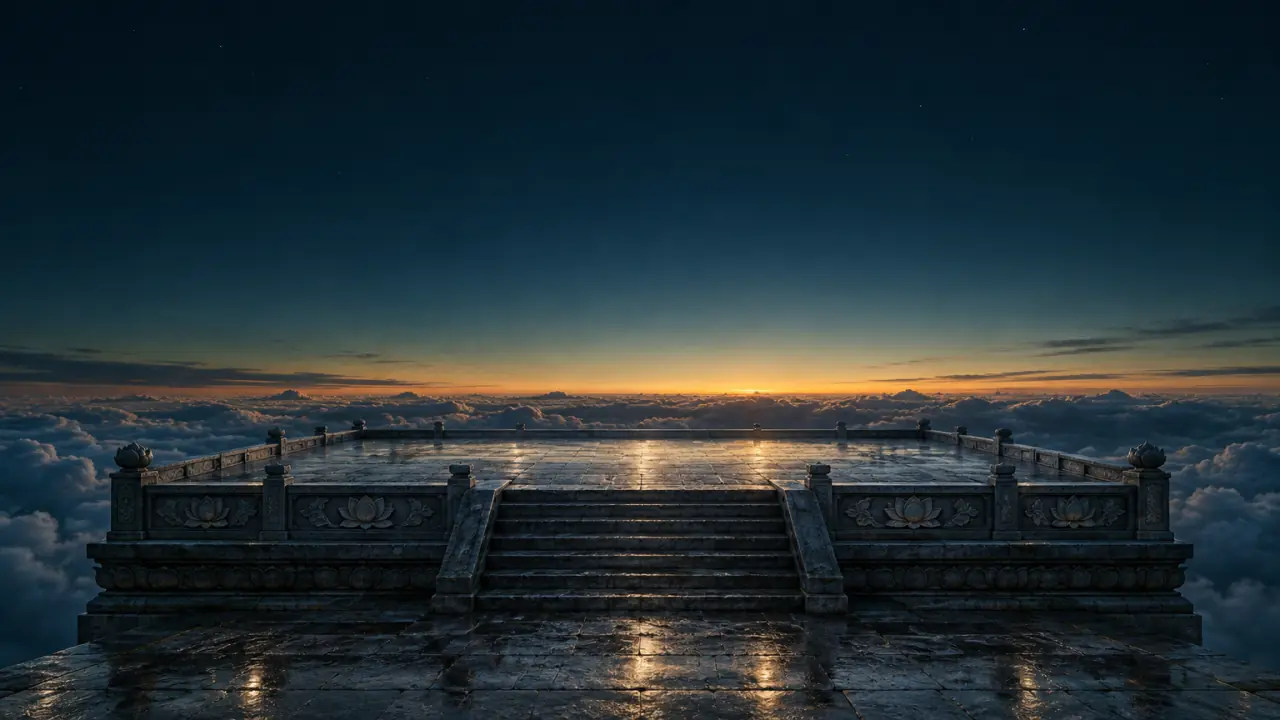
All around is dark. A single line of scripture hangs in the air, never resting on the steps.
Worlds in a Mote
A Buddhist virtual world rooted in real temples, open on phone, desktop and VR.
A 90-second trailer in three chapters: the Gate, the Pure Land and the Sutra Library.
One Bell, Ten Thousand Realms 90 seconds
The trailer can't be played right now. You can read the transcript below.
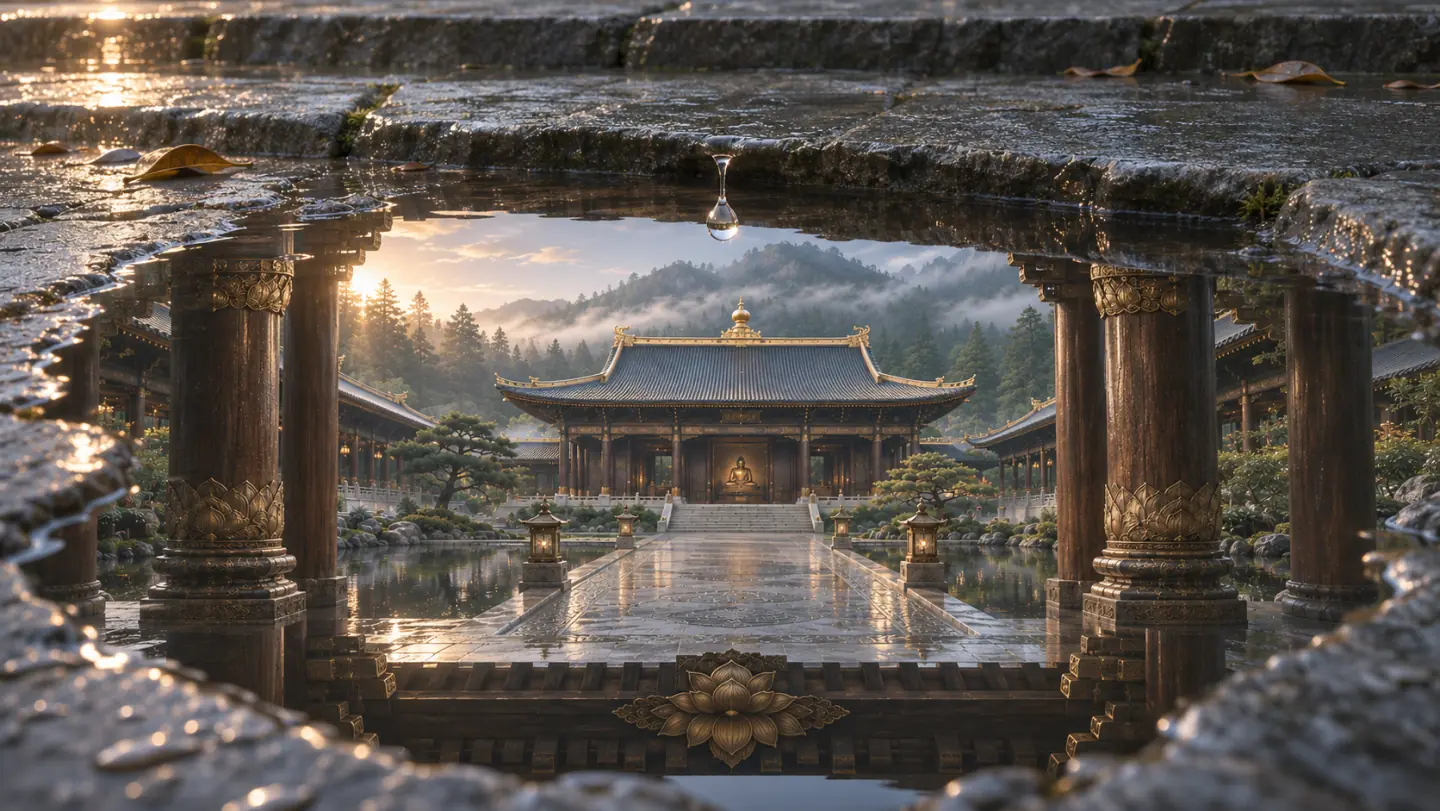
The rain has stopped; a pool of water rests on the stone steps.
Follow the bell through the mountain gate.
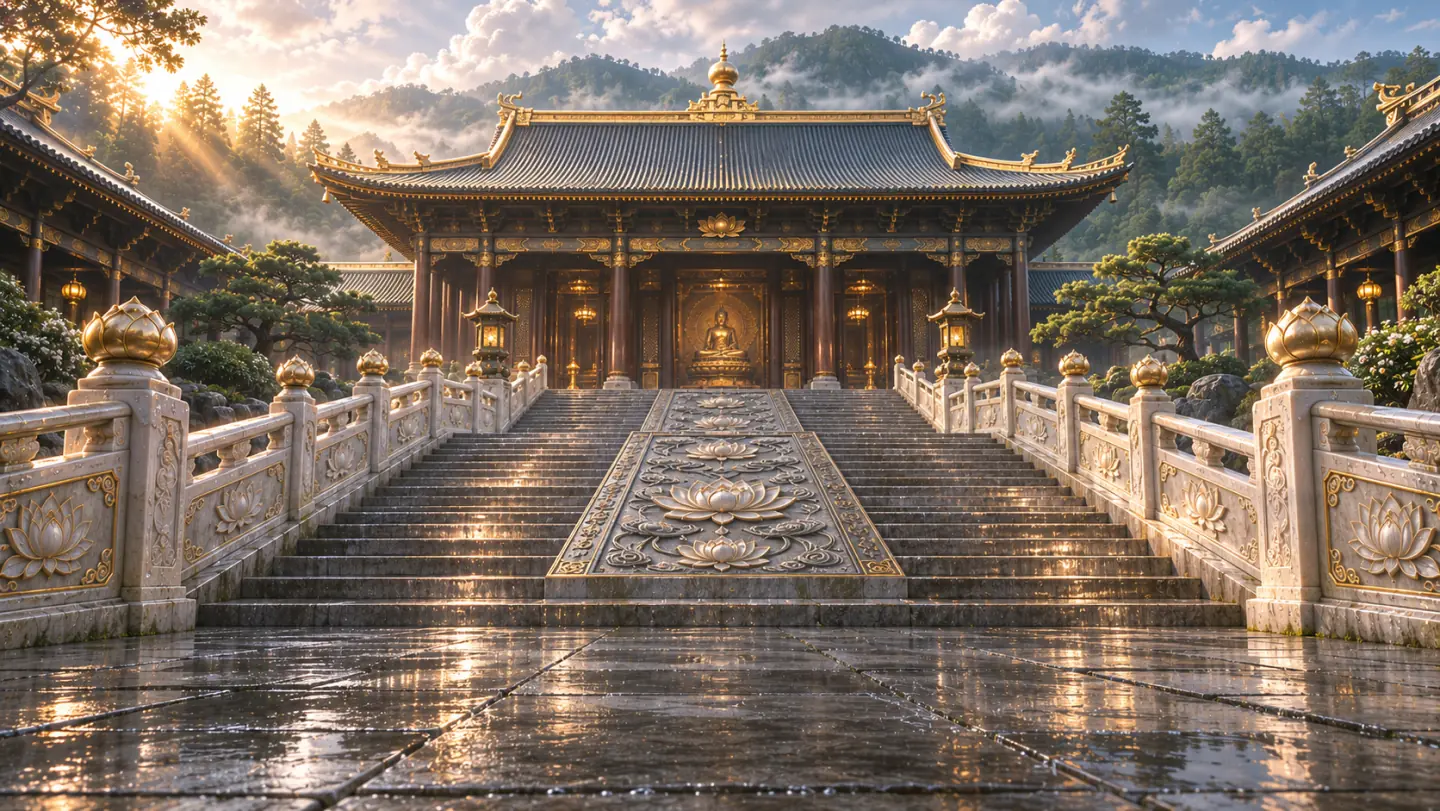
Step by step, up the long stair to the main hall.
Inside the hall, lamps burn quietly before the Buddha.
Beyond the gate, the morning mist begins to lift.
Through the arch, a lotus pond and pavilions come into view.
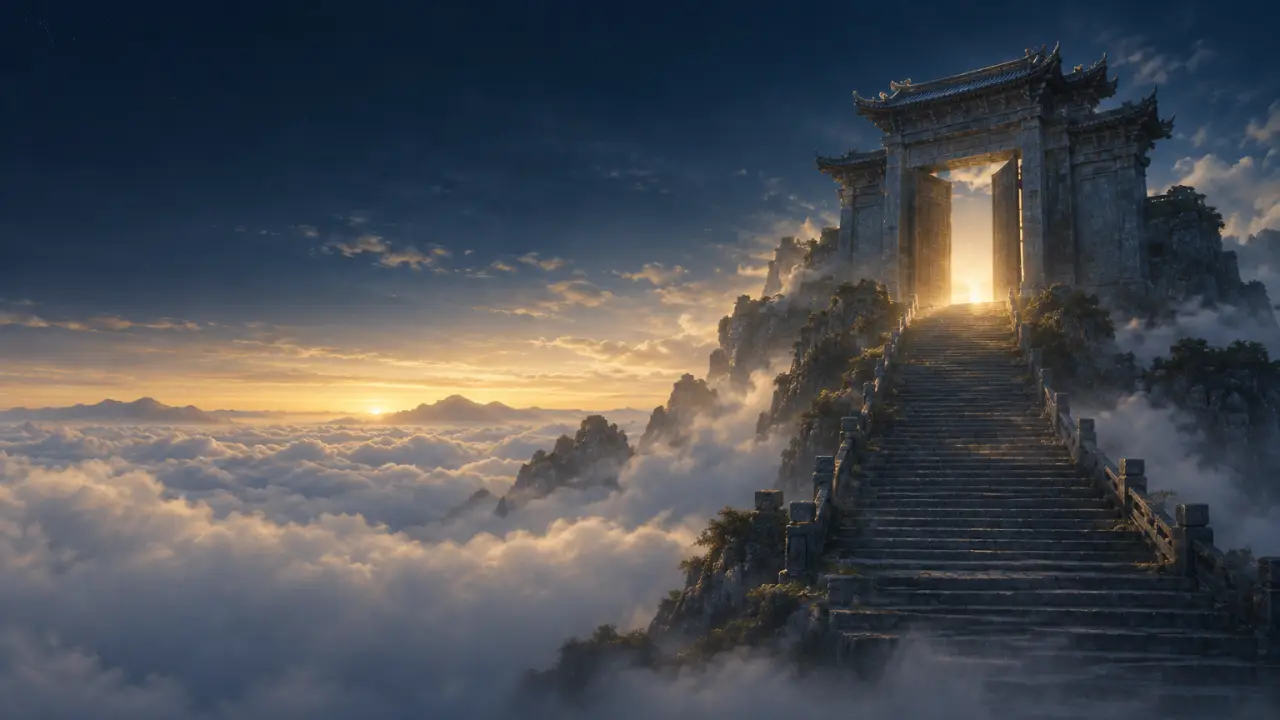
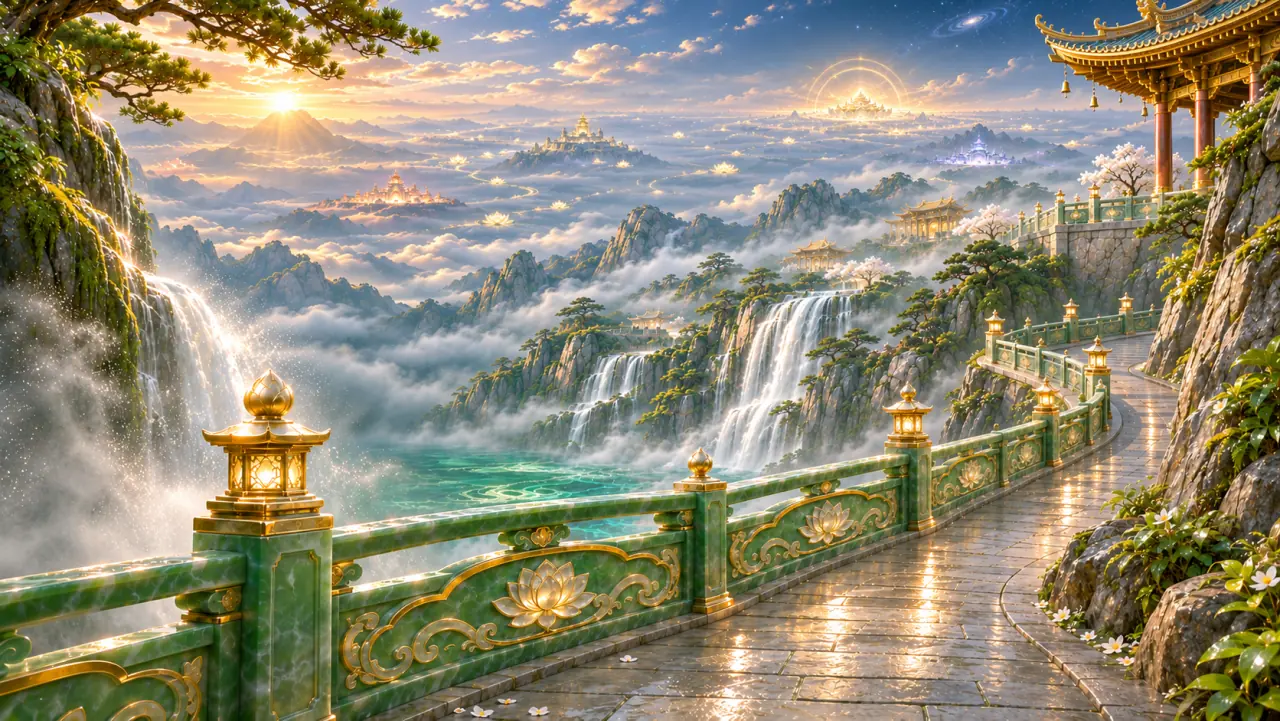
Above the sea of clouds, a path runs along jade railings.
As the light grows, the ten directions open out.
In the sutra library, a book is opened page by page.
You can also come in from your phone.
Put on a VR headset, and the assembly is right before you.
Sit among people from many places and listen to the teaching.
Pass the gate once more, and carry this moment home.
OmniSanctuary. Worlds in a Mote.
Beyond the mirror pool, five flights of steps rise one above another. With each flight, the world gains one more dimension.
An artistic interpretation, not the meaning of the sutras or treatises
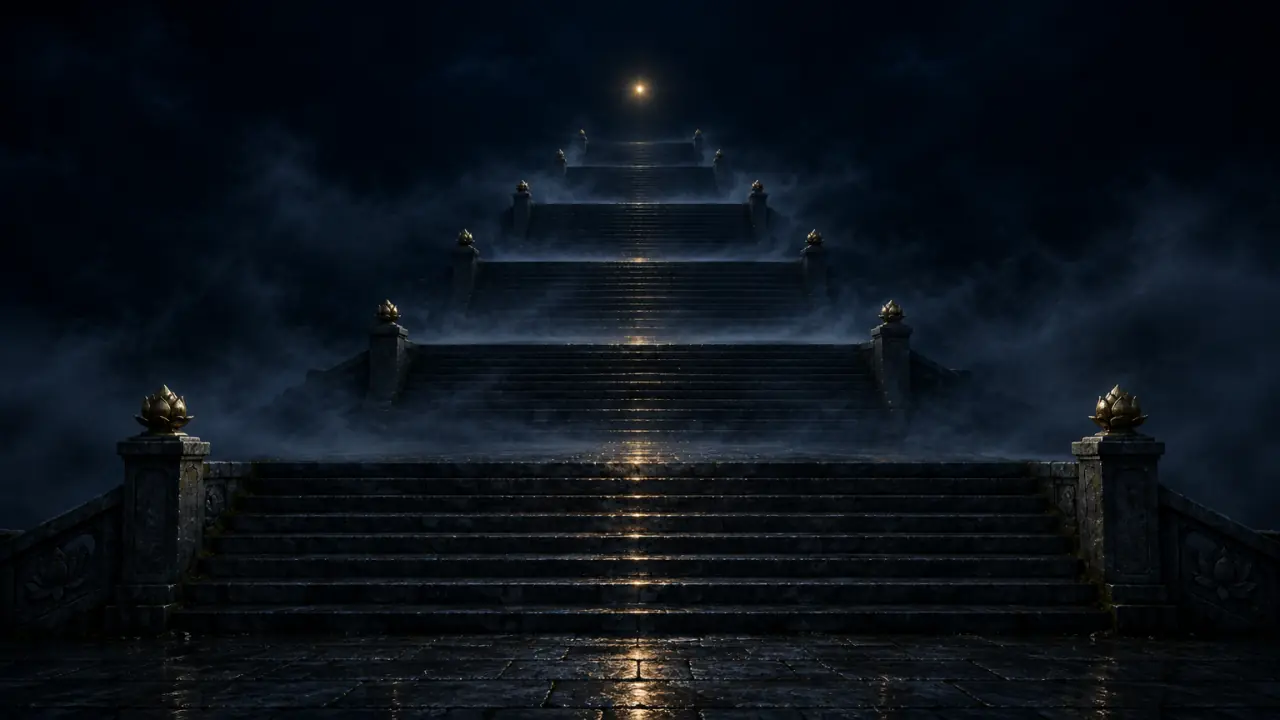
All around is dark. A single line of scripture hangs in the air, never resting on the steps.
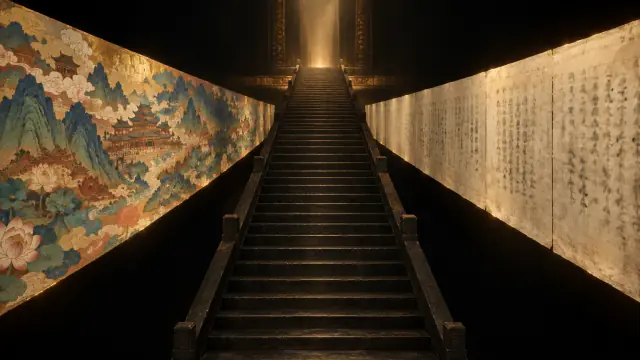
The line unfolds into murals and sutra pages, laid flat on either side.
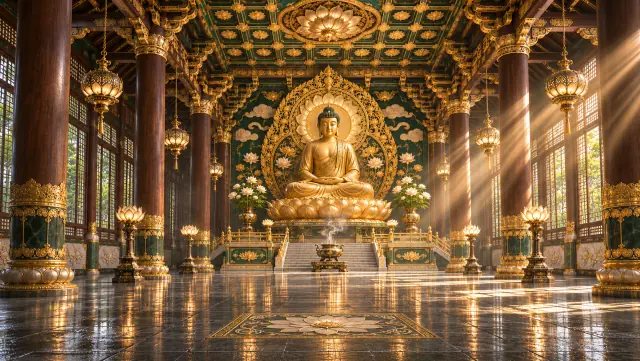
The murals stand up and become a hall, and for the first time there is depth.
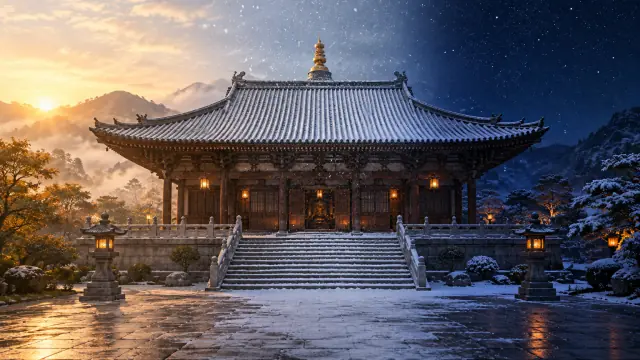
Outside the same hall, dawn, falling snow and the starry night pass in turn. The fourth dimension is time.

The whole hall recedes and becomes a single jewel in Indra's net, reflecting every other jewel.
At the top of the stair lies a round mandala. Eight gates ring the eight directions, with one gate above and one below; the ten gates lead to the ten sanctuaries opening first.
From the Lotus Sutra
The assembly on Vulture Peak where the Lotus Sutra was taught.
EnterFrom the Diamond Sutra and the Śūraṅgama Sutra
The Jeta Grove at Śrāvastī, where two assemblies met in the same garden.
EnterFrom the Amitābha Sutra
The pure land of Amitābha Buddha in the west, as the sutra describes it.
EnterDunhuang, Gansu, China
Caves and murals carved and painted over more than a thousand years.
EnterMount Wutai, Shanxi, China
A timber hall of the Tang dynasty, with layered brackets and deep eaves.
EnterCentral Java, Indonesia
A mandala in stone, built of stacked terraces and bell-shaped stupas.
EnterAn original concept
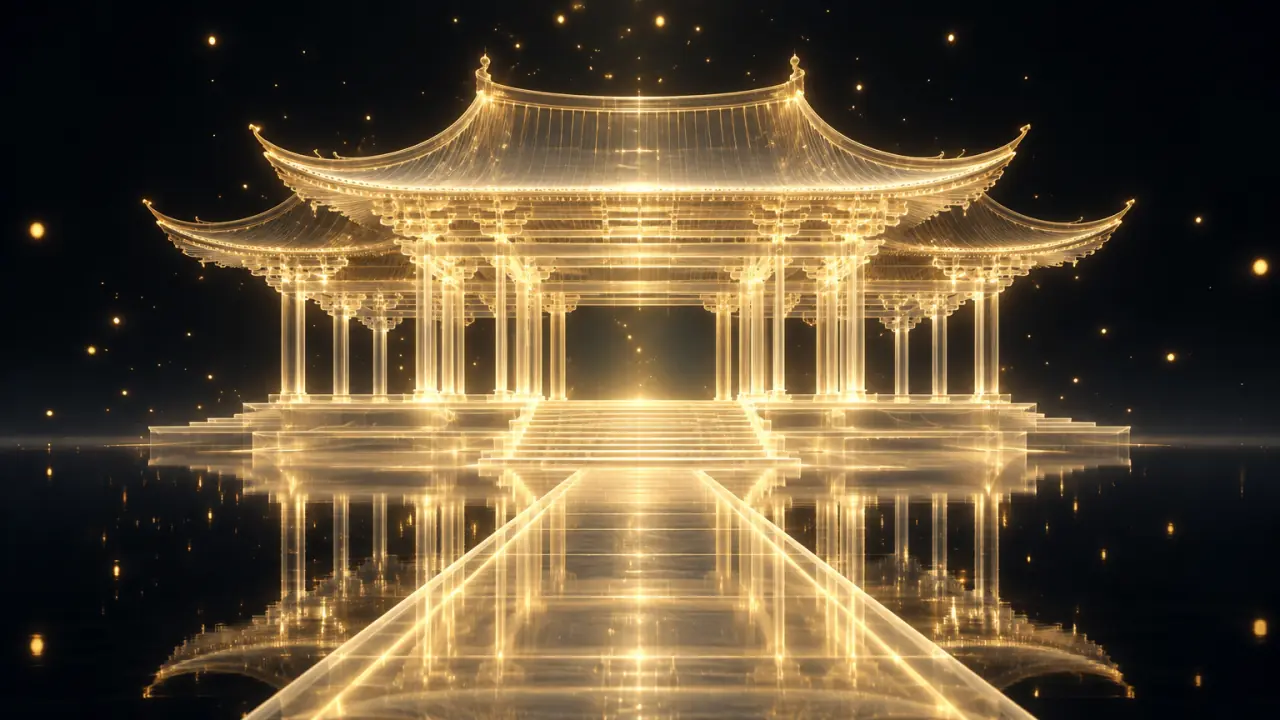
An original fantasy sanctuary where light folds back and forth through a crystal lattice.
EnterAn original concept
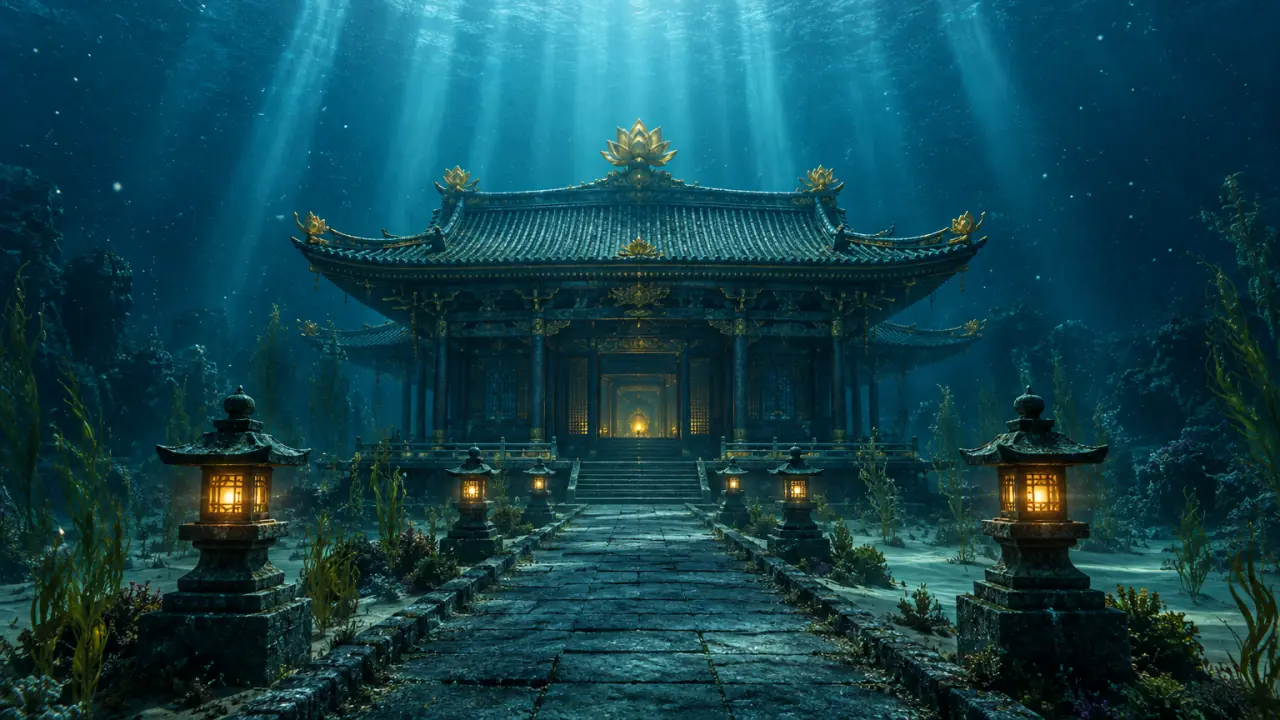
An original fantasy sanctuary deep under the sea, lit by a faint glow.
EnterNot yet decided together with a reviewer from this tradition; to be written once it is
Not yet decided together with a reviewer from this tradition; to be written once it is
EnterNot yet decided together with a reviewer from this tradition; to be written once it is
Not yet decided together with a reviewer from this tradition; to be written once it is
EnterFrom one side of the mandala, a long corridor leads on. Between the columns of each bay lies a Buddhist site from another age.
Ordered by date. Ajanta spans two phases far apart; it is dated by its second phase (5th century) and so follows Gandhara.
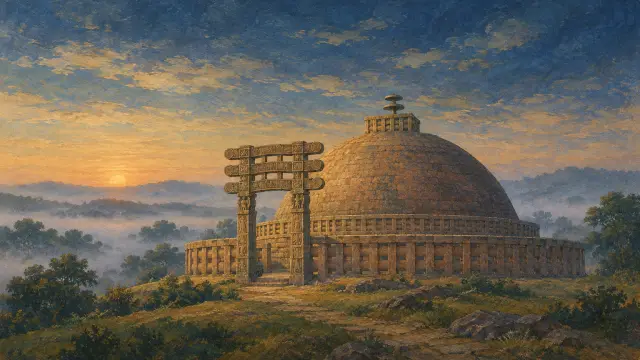
Artistic rendering, not the actual site
Great Stupa c. 3rd century BCE (begun under Ashoka); carved gateways c. 1st century BCE; in use until c. 12th century
Sanchi, Raisen district, Madhya Pradesh, India
A hemispherical stupa with four carved gateways (torana); the reliefs show the Buddha only through symbols, never in human form
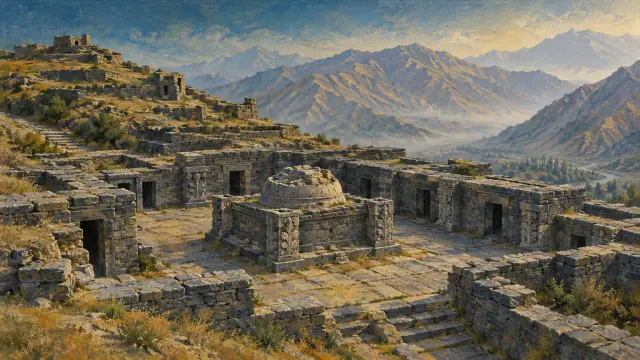
Artistic rendering, not the actual site
c. 1st century BCE to 5th century CE, at its height under the Kushan king Kanishka (1st–2nd century CE)
Northwestern Pakistan and eastern Afghanistan (Taxila, Peshawar, Swat Valley)
Hellenistic-style Buddhas carved in grey schist (wavy hair, toga-like robes, Apollo-like faces), among the earliest traditions of the Buddha in human form
A region and school of art, not a single monastery
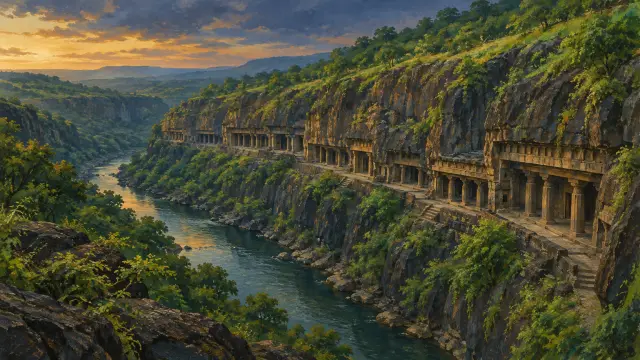
Artistic rendering, not the actual site
Two phases: c. 2nd century BCE to 1st century CE (Satavahana period); c. 460–480 CE (Vakataka period)
A horseshoe-shaped basalt cliff above the Waghur River, Maharashtra, India
Murals in some 30 caves (such as the Padmapani in Cave 1) and chaitya prayer halls, the largest surviving body of ancient Indian painting
Its two phases are far apart; it is placed here by its second phase (5th century)
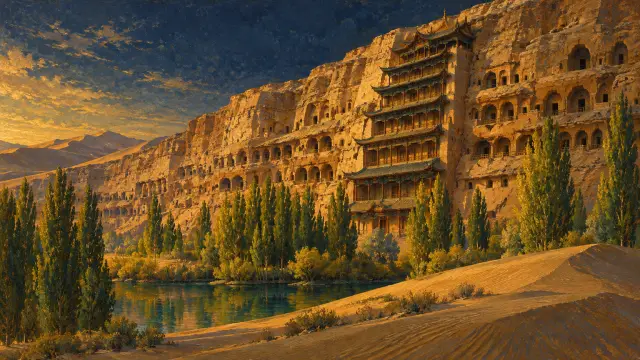
Artistic rendering, not the actual site
Begun in 366 CE, in use from the 4th to the 14th century
Southeast of Dunhuang, Gansu, China
492 surviving caves with about 45,000 square metres of murals and over 2,000 painted sculptures, the largest and longest-lived treasury of Buddhist art in the world
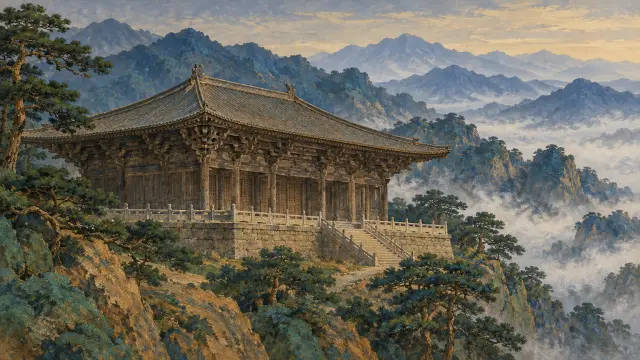
Artistic rendering, not the actual site
857 CE (the largest and most complete surviving Tang-dynasty timber hall)
Mount Wutai area, Shanxi, China
Bracket sets: a deep-eaved roof carried on layered timber brackets
Artistic rendering, not the actual site
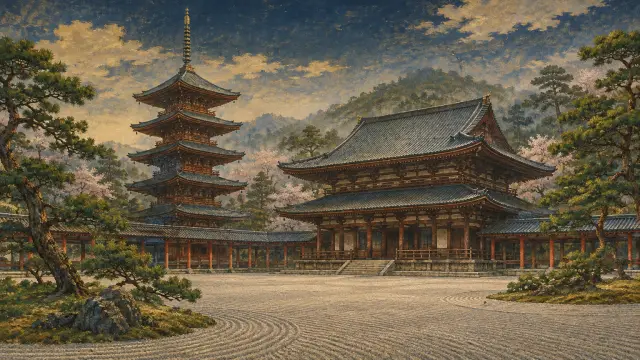
Founded c. 607 CE (Prince Shōtoku and Empress Suiko), rebuilt after a fire in 670; the present western precinct dates from the late 7th to early 8th century
Ikaruga, Nara Prefecture, Japan
The oldest surviving group of timber buildings in the world: the five-storey pagoda and the Golden Hall, in the Asuka style
Artistic rendering, not the actual site
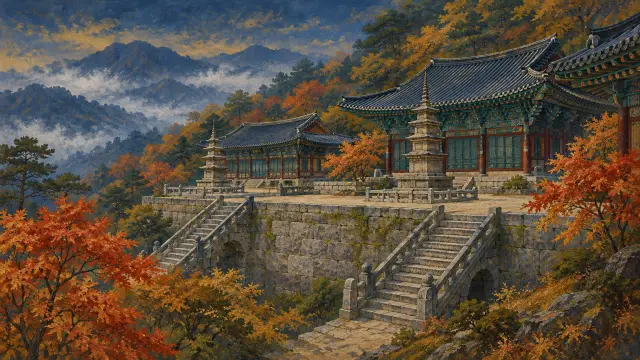
Built c. 751–774 CE (reign of King Gyeongdeok, under Kim Dae-seong)
Mount Toham, Gyeongju, South Korea
The stone pagodas of Bulguksa (Dabotap and Seokgatap) and the great seated Buddha in Seokguram's granite-domed grotto
Artistic rendering, not the actual site
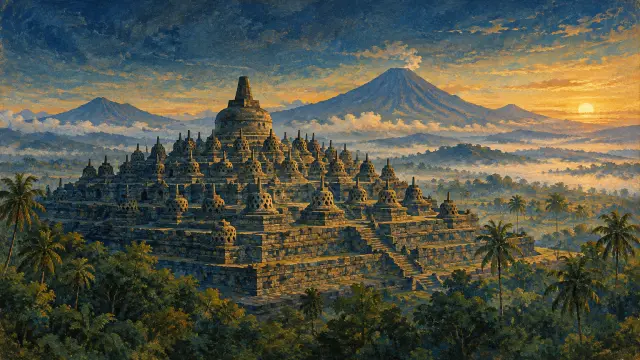
c. 780–840 CE (Sailendra dynasty)
Kedu Plain, Magelang, Central Java, Indonesia
A mandala in stone of nine terraces (six square, three round), with over 2,600 relief panels and 72 bell-shaped stupas, the largest Buddhist monument in the world
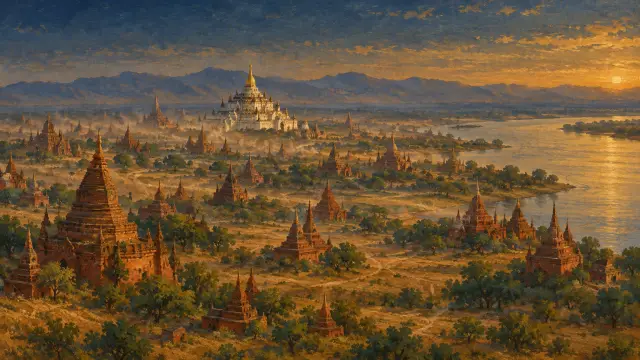
Artistic rendering, not the actual site
11th–13th century (height of the Pagan kingdom); Ananda Temple c. 1105 CE (King Kyansittha)
The Bagan plain on the east bank of the Irrawaddy, Mandalay Region, Myanmar
More than 2,200 surviving stupas and temples across the plain
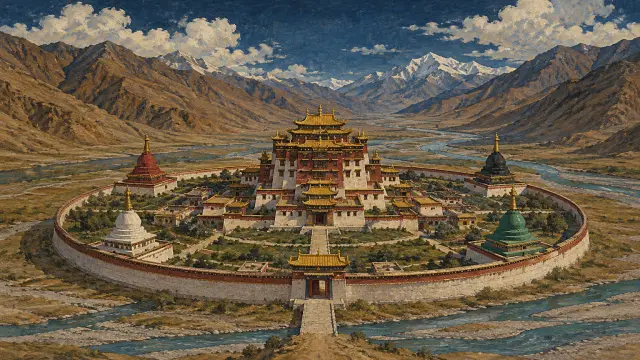
Artistic rendering, not the actual site
A representative monastery laid out as a mandala, begun c. 763 and completed with the first ordinations in 779 CE (King Trisong Detsen, with Śāntarakṣita and Padmasambhava)
North bank of the Yarlung Tsangpo, Shannan, Tibet
The whole monastery is laid out as a mandala: the central Utse hall stands for Mount Meru, the surrounding halls for the four continents and eight subcontinents, the outer wall for the iron mountains
1 of 10 seen
At the end of the cloister stands a single door. The frame stays still; the universe beyond it changes. Drag the divider in the doorway to compare two, or choose a name below.
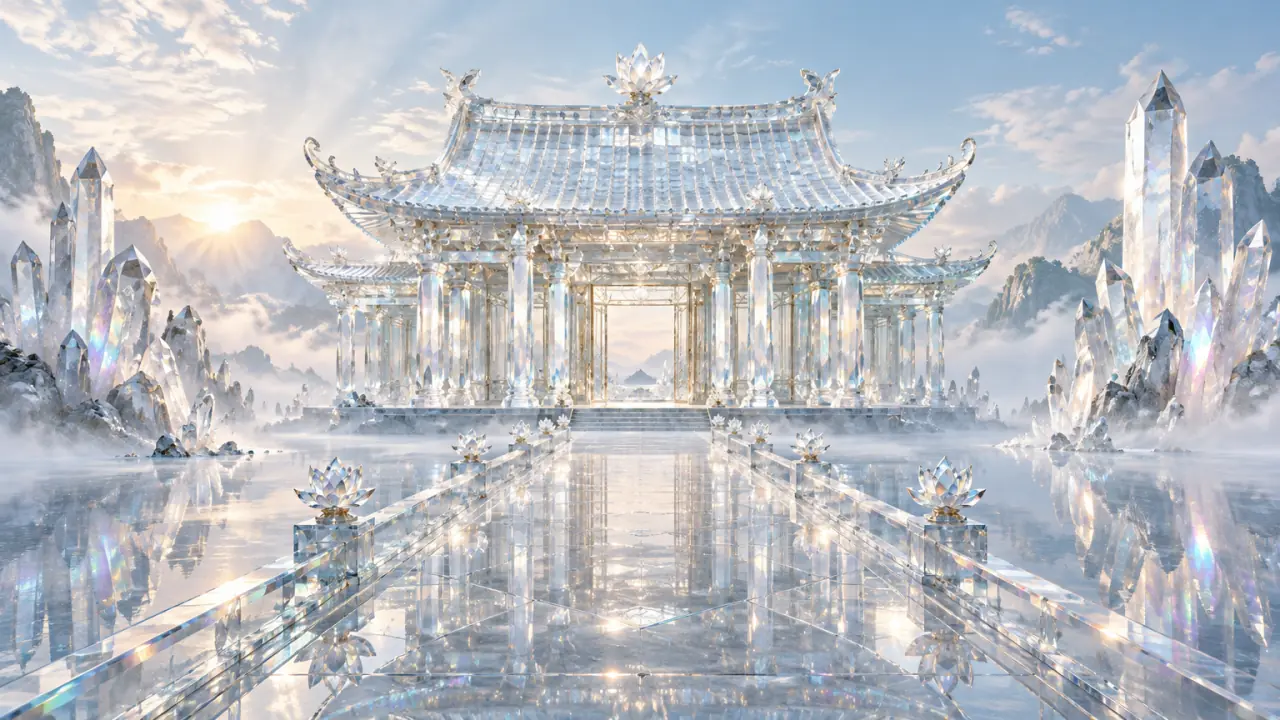
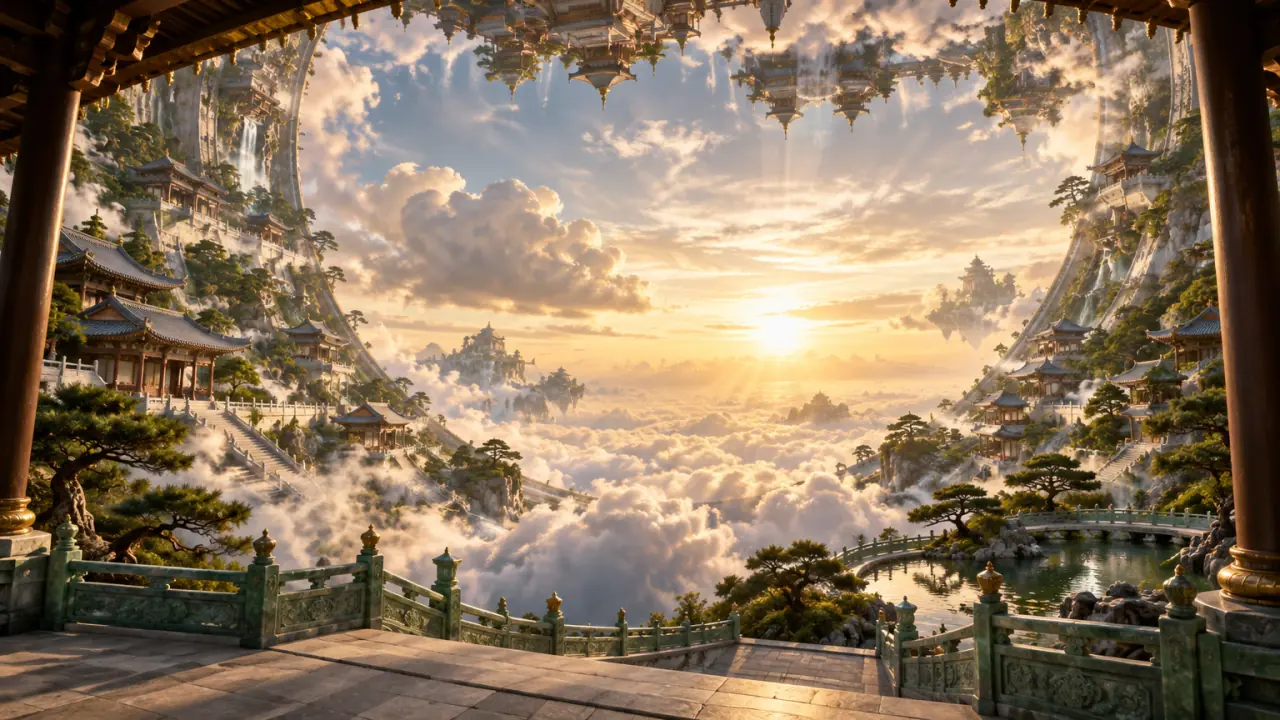
Through the door lies an open terrace: a sea of clouds below, the whole sky above. Look up, and the view recedes one order at a time.
1
One Mount Sumeru, four continents, a sun and a moon
1,000
A thousand worlds
1,000,000
A million worlds
1,000,000,000
A billion worlds
NoteCounts follow the common reading. Source: Abhidharmakośa-bhāṣya, Chinese translation by Paramārtha, fascicle 9, CBETA T29n1559.
The long shot “Into the Mote” can't be played right now. You can read the transcript below.
Skip the long shotAbove the sea of cloud, countless worlds lie beyond the terrace.
One world, a thousand, a million, spreading out in turn.
Countless worlds shrink to a single mote in a beam of light.
The view passes into the mote.
Inside the mote stands a sutra library.
Light falls on the desk: station 08, the Sutra Library.
The mote settles, and the visitor stands in the Sutra Library, round shelves rising tier on tier. Six sutras are kept here, one scroll each, with one seat reserved for the Theravāda tradition and one for the Tibetan.
Translated by Kumārajīva
The Jeta Grove at Śrāvastī, where Subhūti rises to ask.
They ought to sedulously cultivate a mind independent of every material aid.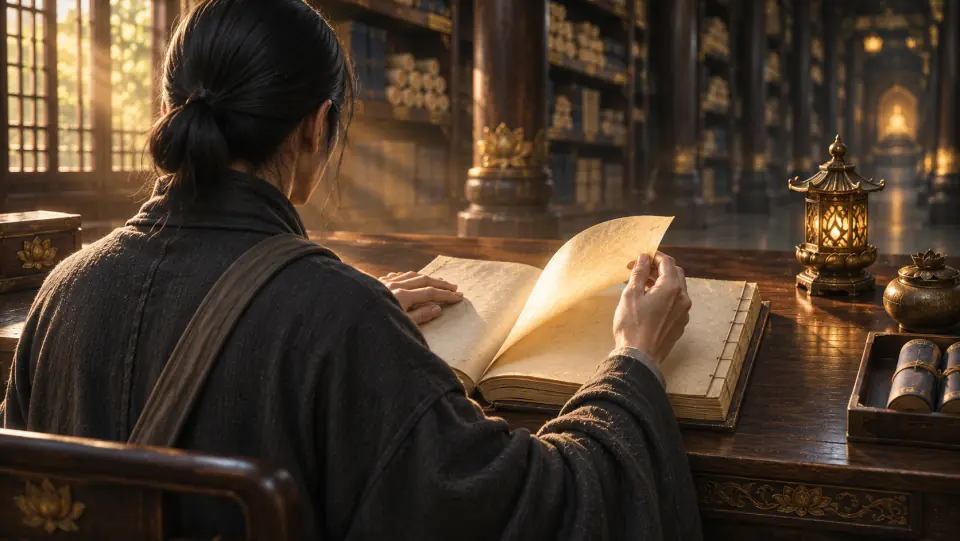
Translated by Kumārajīva
Teaching on Vulture Peak: the worlds of the east are lit, and the Stupa of Many Treasures rises.
Translated by Kumārajīva
Ponds of the seven treasures and water of eight virtues, with lotuses in bloom.
Translated by Kumārajīva
A small room that holds thirty-two thousand lion thrones.
Dunhuang mural
A Northern Wei mural comes alive in three dimensions.
Indra's net, each jewel reflecting every other, leading on to station 15.
A reserved seat, to be filled once the scope of inclusion is decided.
A reserved seat, to be filled once the scope of inclusion is decided.
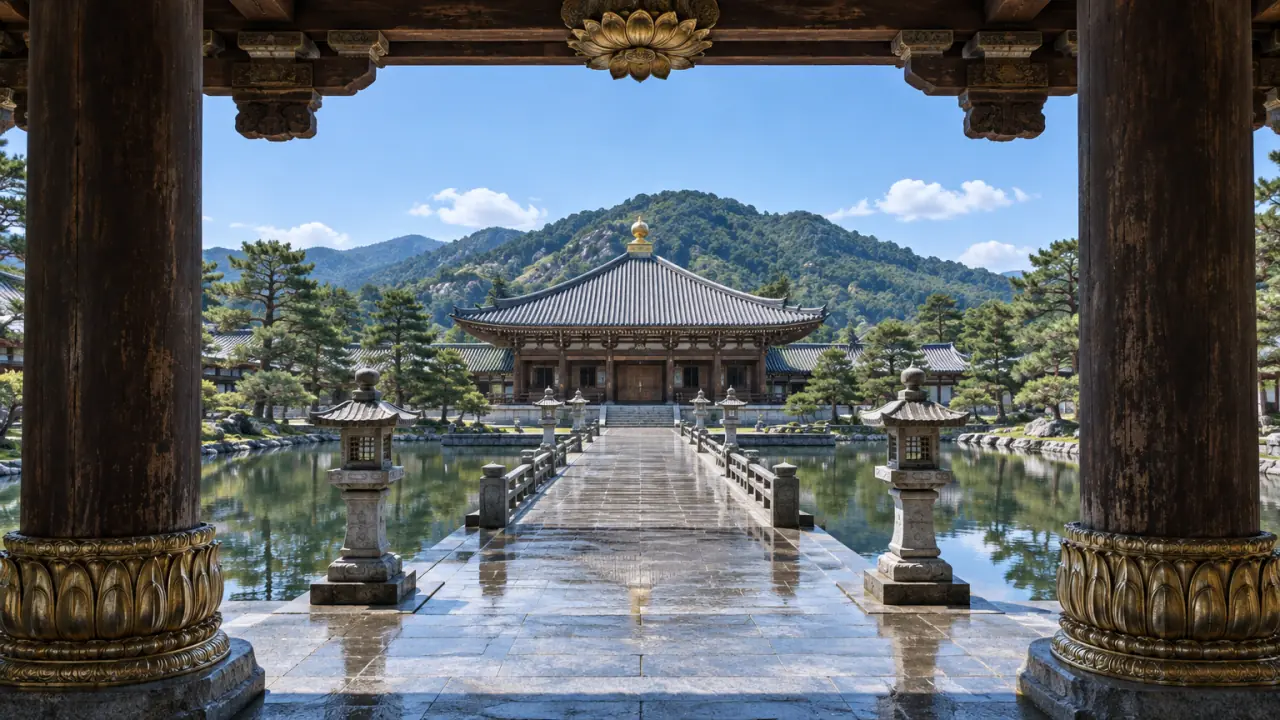
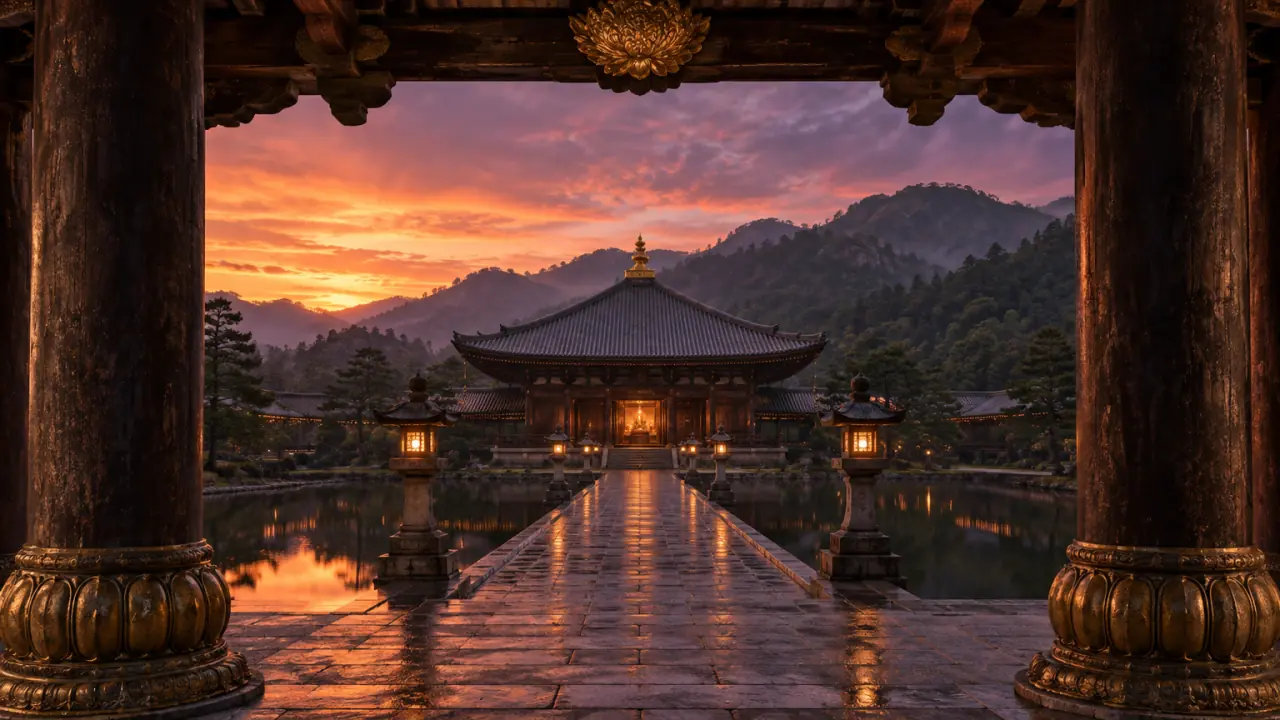
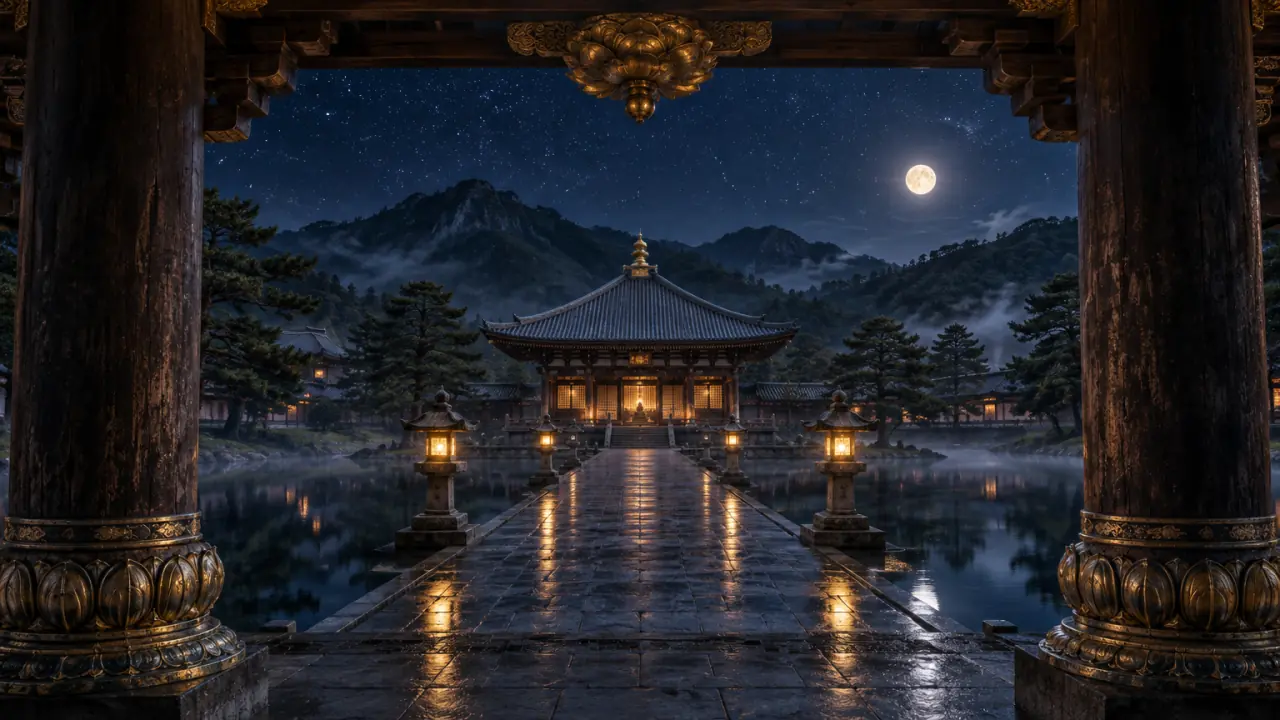
One courtyard, turning from first light to afternoon, dusk and night. Move through the day and see where practice fits into it.
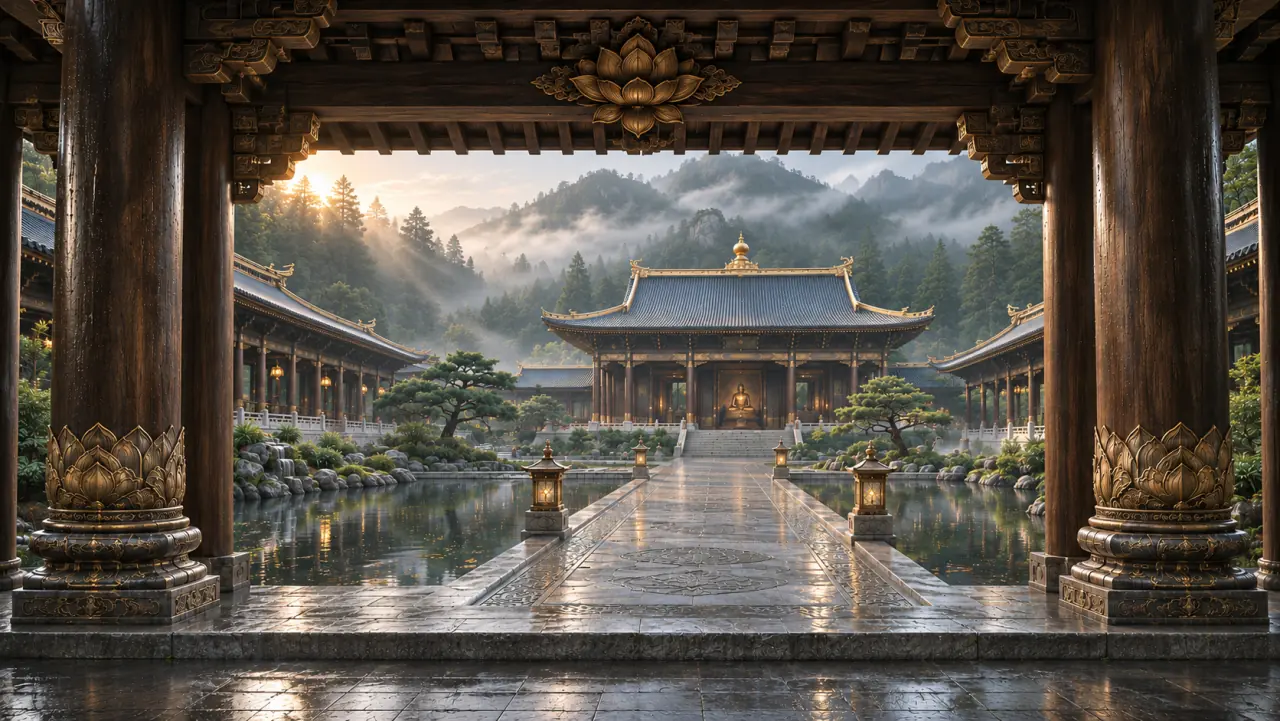
The day opens in the courtyard as a thin line of incense smoke rises from the burner.
In the bright afternoon, read the sutras, listen to a teaching and study at your own pace.
At dusk the lamps in the hall are lit, and practitioners from many places join the assembly together.
Under the stars, look back on the day and dedicate its merit to all beings.
Virtual practice is an aid and a skilful means. It does not replace taking refuge, receiving the precepts or learning under a teacher at a temple in person.
Teachings arranged by temples, with practitioners on phones, computers and VR seated in one hall. The guide shows where its answers come from, and partner temples keep watch.
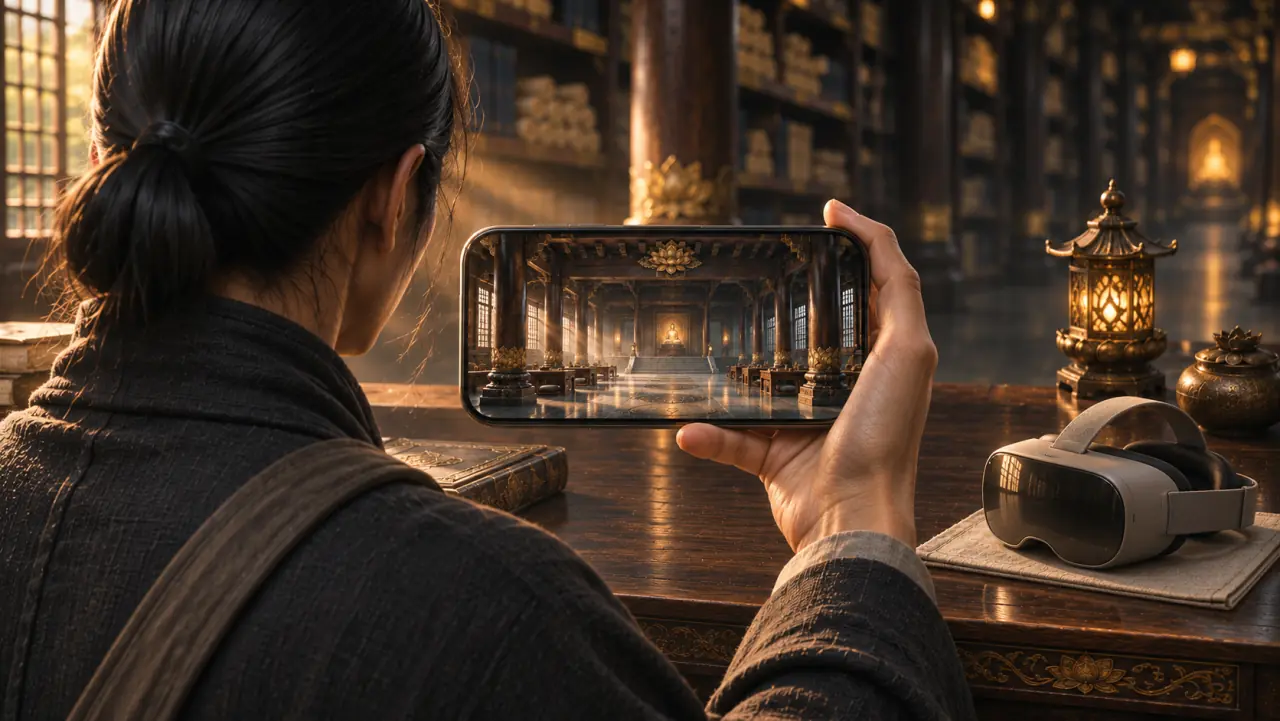
Temples arrange the teachings. Whether you join from a phone, a computer or a VR headset, you sit in the same hall.
This is the product vision. It is in development and not yet open.
Each answer from the guide comes with its source, and hard questions go to a designated teacher. Below is a feature demo.
Which line of the Diamond Sutra is quoted most often?
It comes from the Diamond Sutra; the source is below.
Source
They ought to sedulously cultivate a mind independent of every material aid.Diamond Sutra (Kumārajīva's Chinese, CBETA T08n0235), English by William Gemmell, 1912, p. 40
Feature demo, not a real conversation
Partner temples will be named once agreements are signed. The temple partnership section explains how to take part, the application form and who holds review rights.
Temple partnershipsSeal examples: certified temples and community realms are told apart by shape.
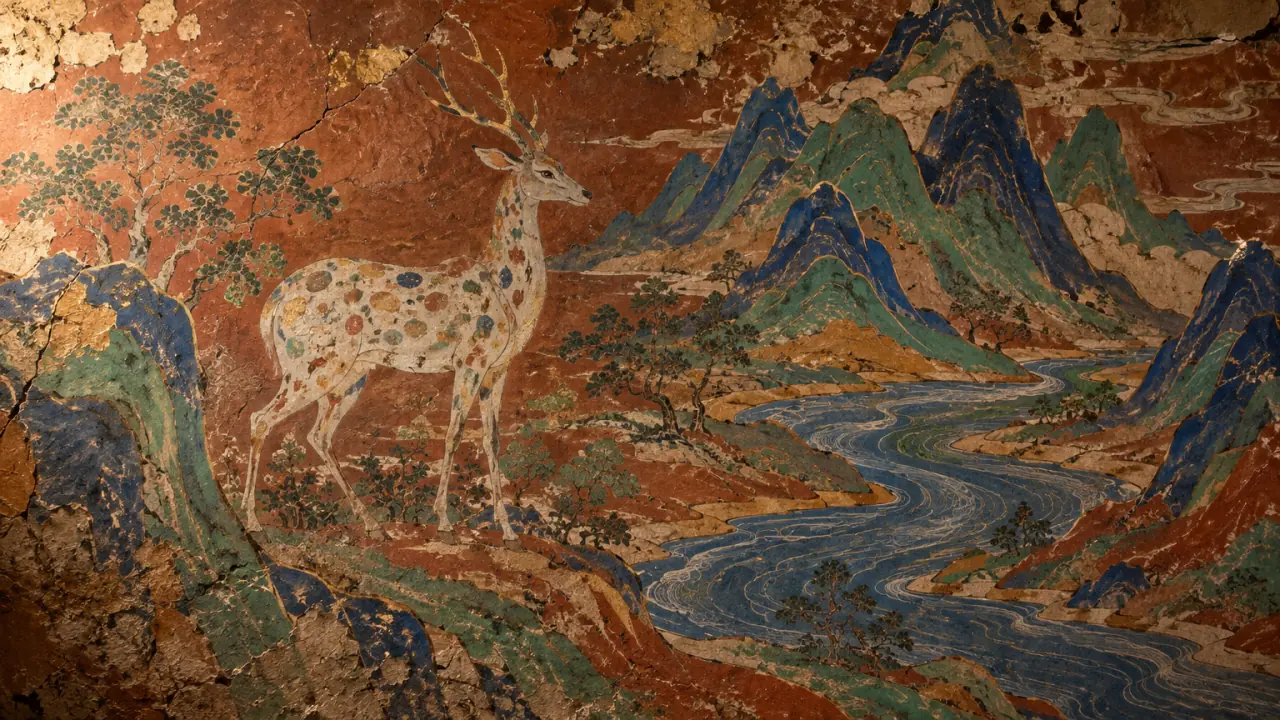
Follow it from one realm to the next.
The nine-coloured deer that has led the way stops before this mural. Its form follows the Northern Wei mural The Deer King Jataka in the Mogao Caves at Dunhuang; here you see where it came from.
The short film can't be played right now. You can read the transcript below.
Skip the short filmThe nine-coloured deer that led the way comes from a mural.
It steps into the cave, carrying light.
On the wall is the form it came from.
With one light leap, it returns to the mural.
By lamplight, the mural is still again.
No servers to run. Plug in and operate.
Build your own realm, connect it to the platform, then run it yourself or let the platform run it for you. Tooling and terms will be published with the developer platform.
| Mode | Developer | Platform |
|---|---|---|
| Self-operated | Building the realm, content updates, day-to-day operation | Hosting, release review, certification seals, payment and settlement channels |
| Platform-operated | Building the realm, providing content | Hosting, day-to-day operation, release review, certification seals, payment and settlement channels |
Notes from the workshop as the sanctuary takes shape.
Technical and craft notes on how the halls are made.
Who reviews what we publish, and the principles they follow.
A first note on what we hope to build and why.
Update schedule and editor to be announced.
All journal entriesLeave an email and we will write when the beta opens.
If this address has a pending pre-registration, the confirmation email will go to it. We send at most one email every ten minutes, so please check your inbox and spam folder first.
The confirmation email includes a link to change your devices or withdraw at any time.
Thank you. Please check your inbox for a confirmation email.
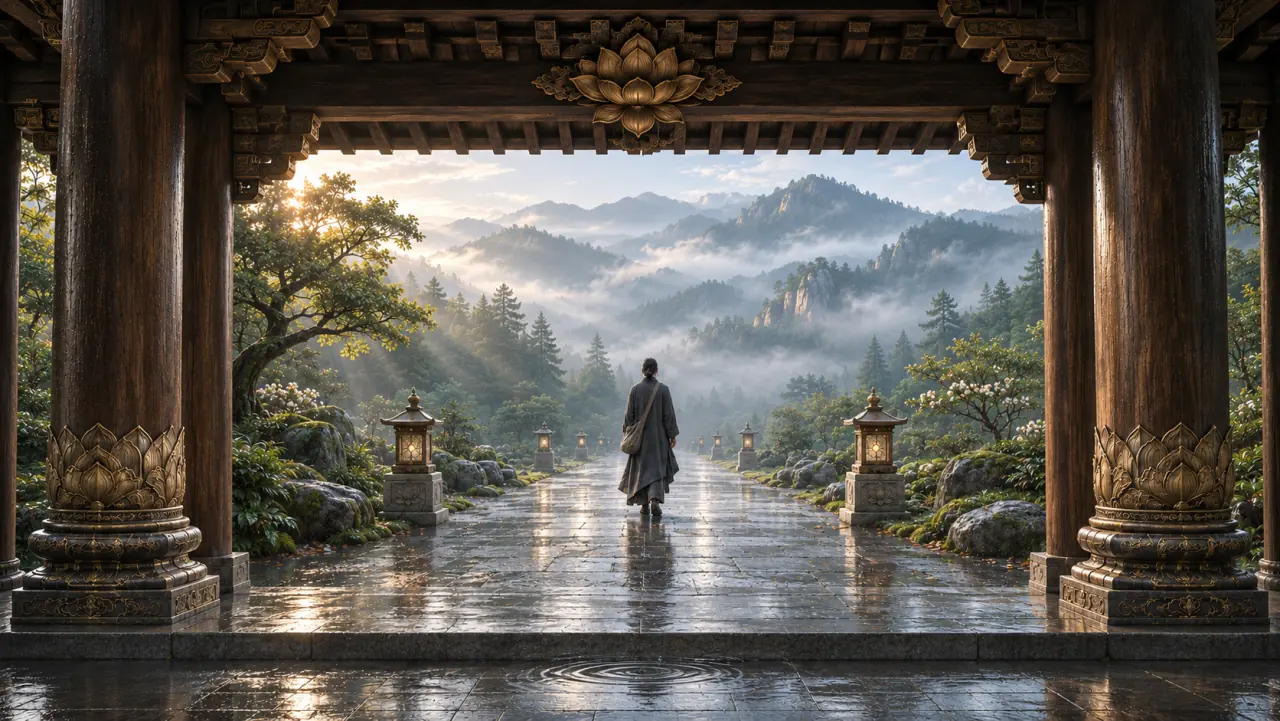
The phenomena of life may be likened unto a dream, a phantasm, a bubble, a shadow, the glistening dew, or lightning flash, and thus they ought to be contemplated.The video cannot play right now.
This device cannot show the live scene. A still image is shown instead.
You are offline. Anything you have entered is kept. You can continue once you are back online.